

Home
YesRef
Accelerating market entry through a high-efficiency MVP build
As the lead designer, I drove the build of a referee management platform, delivering a high-efficiency web app through strategic user flows and a streamlined UI to accelerate market entry.
Creative & Product Strategy
User Research
Prototyping
Design System
Web Accessibility
B2B Acumen
20% reduction in admin friction

Slide 1
Slide 2
Slide 3
1. Challenge & Strategic Alignment
The project’s goal was to build and launch a professional MVP web application for finding, paying, and managing sports referees to get the product to market fast. The core challenge was to architect a multi-sided marketplace, balancing the needs of sports organisations with the administrative requirements of referees within a lean, intuitive interface ready for immediate launch.
Goals
Business Goals: Rapidly deploy a high-performance platform that reduces administrative friction, establishes user trust during financial transactions, and provides a competitive entry point into the sports tech market.
Strategic Kickoff: As the Lead Designer, I spearheaded the creative and strategic direction for the initial build. I focused on defining a clear design rationale that prioritised essential core features, ensuring the product was robust enough for market entry while maintaining an accelerated development timeline.
2. Process, Team, and Design Phase
The project utilised a lean, agile approach to ensure a successful first-to-market launch without compromising on user experience.
Roles and Responsibility
Lead Designer: I was responsible for the end-to-end design of the MVP, including UX strategy, Information Architecture, and high-fidelity UI execution.
Team Members: The core project team consisted of myself (Lead Designer), a UX Designer, a Project Manager, and a Frontend Developer.
Technical Collaboration: I worked in close partnership with the Frontend Developer to ensure the design was optimised for a fast build, maintaining a focus on technical feasibility and rapid deployment.
Design phase and testing strategy
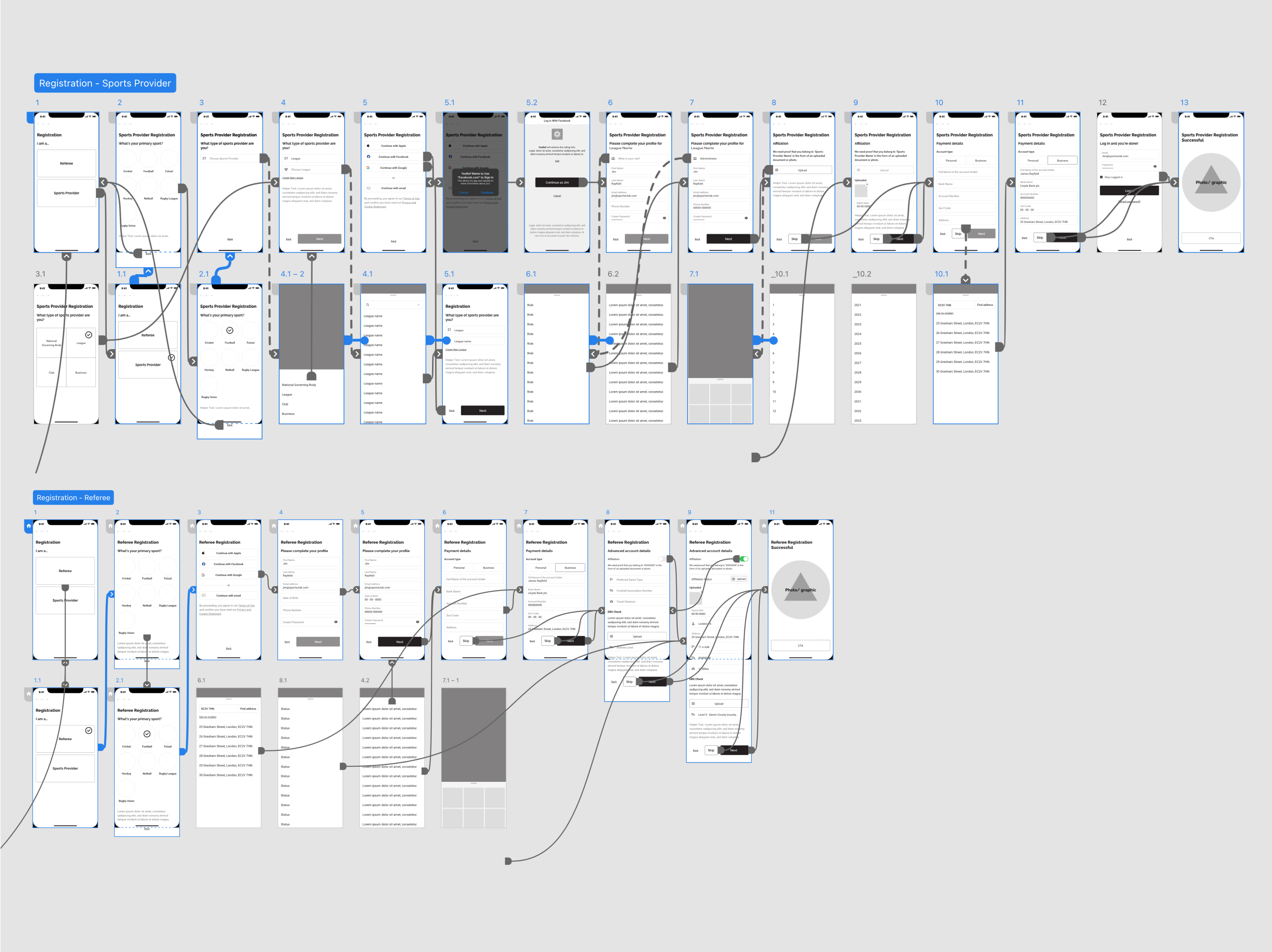
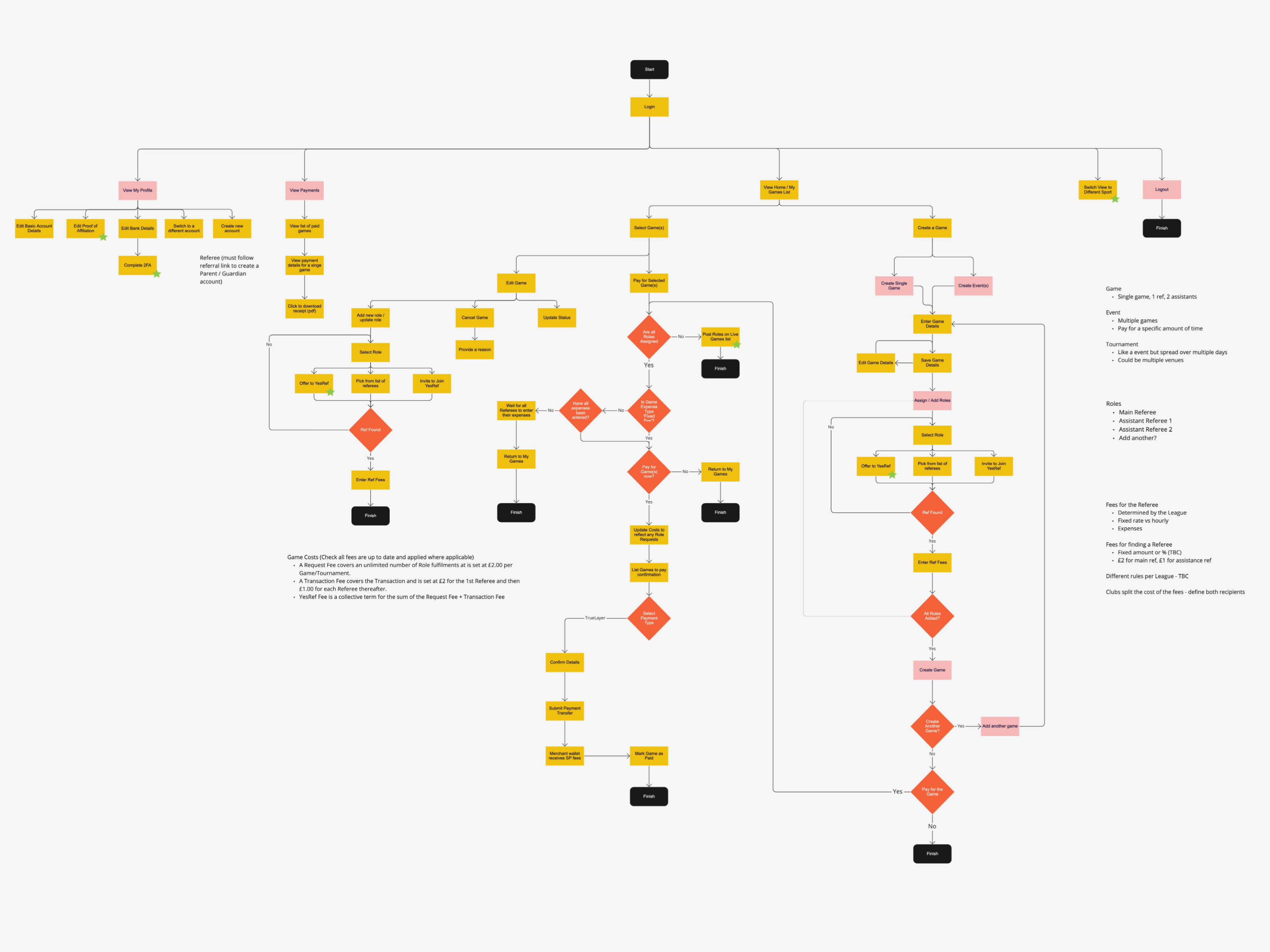
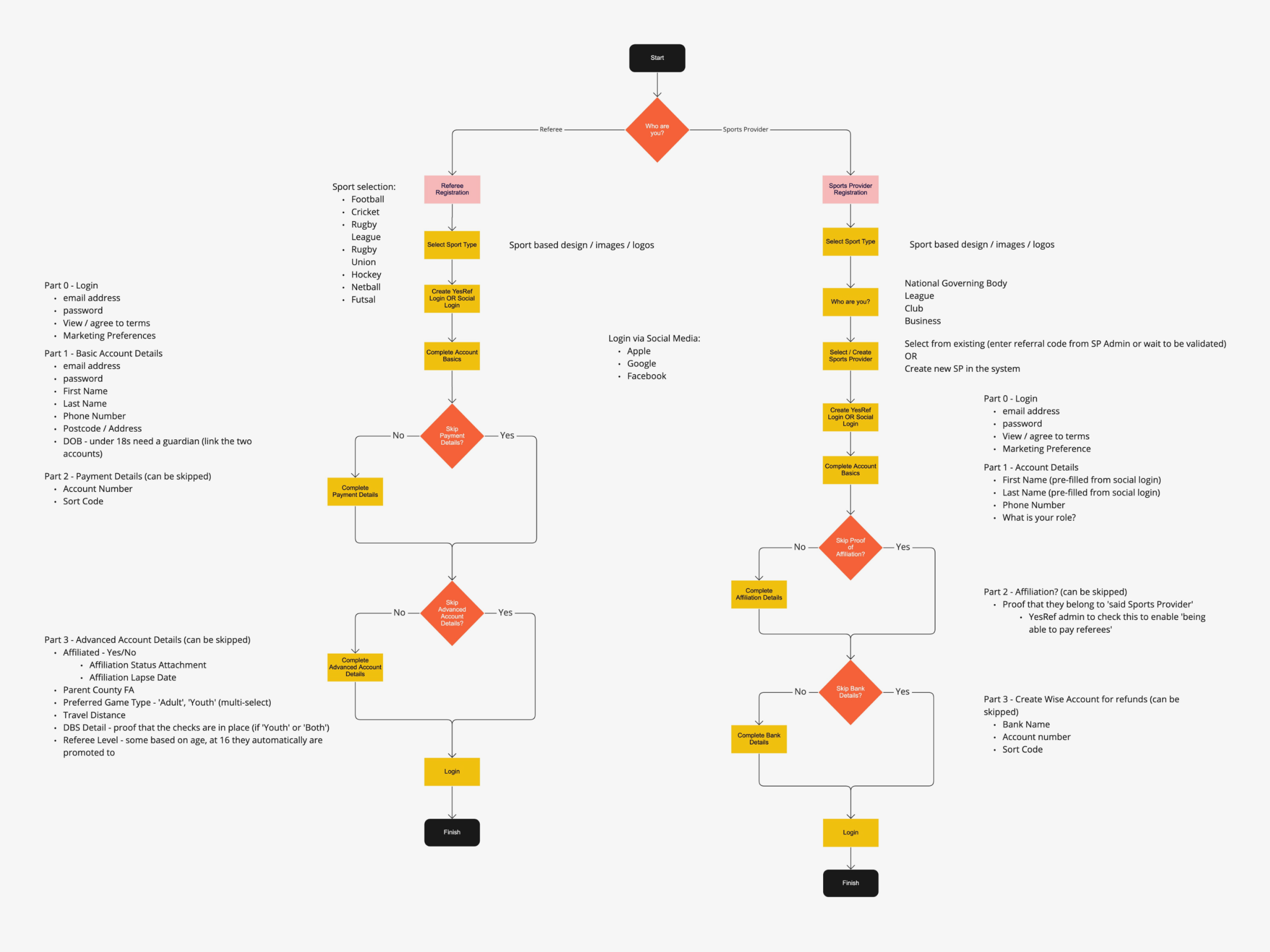
Information Architecture: I structured the application’s initial logic to prioritise "seamless navigation" for core tasks like referee scheduling and payment processing.
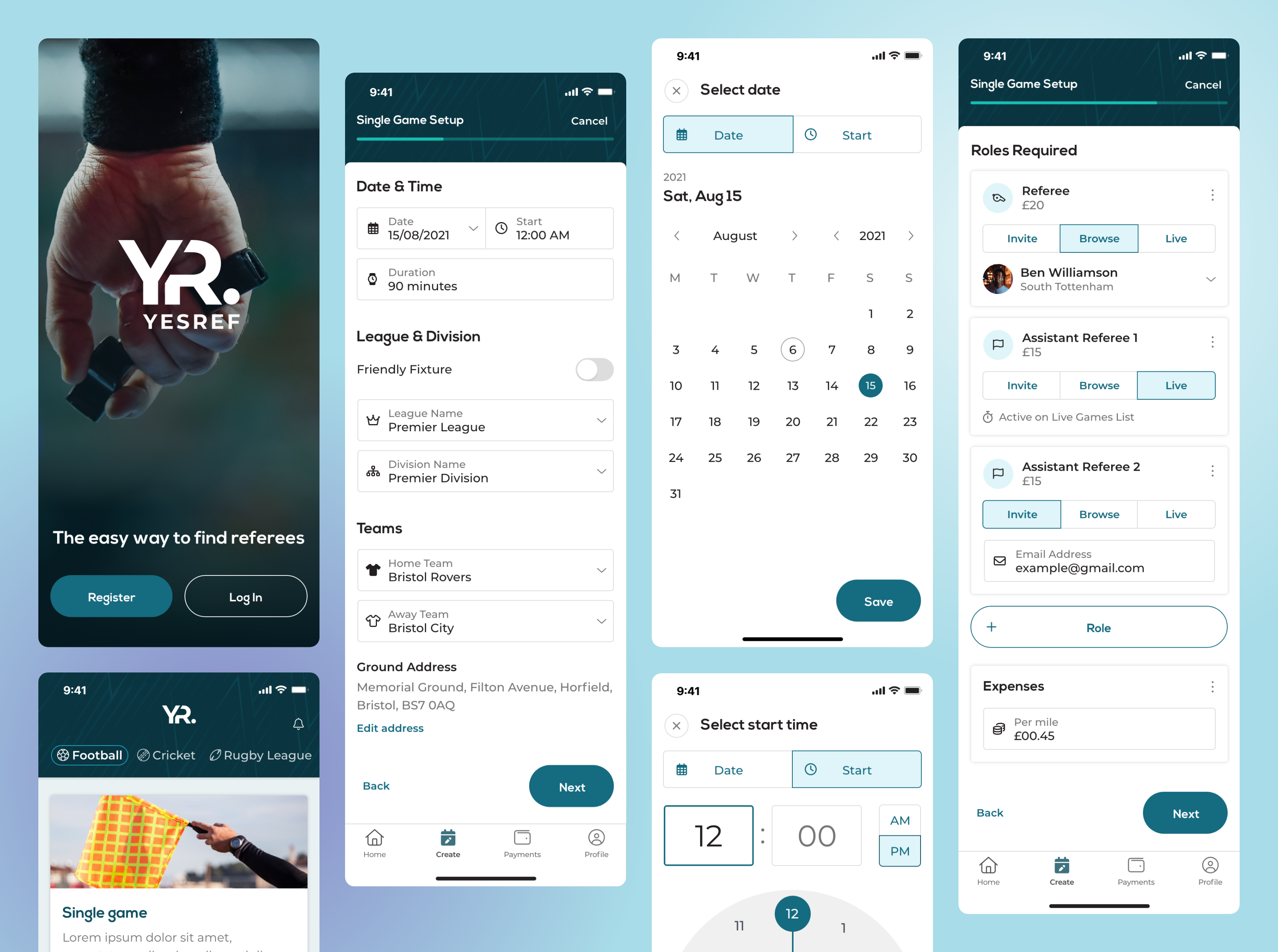
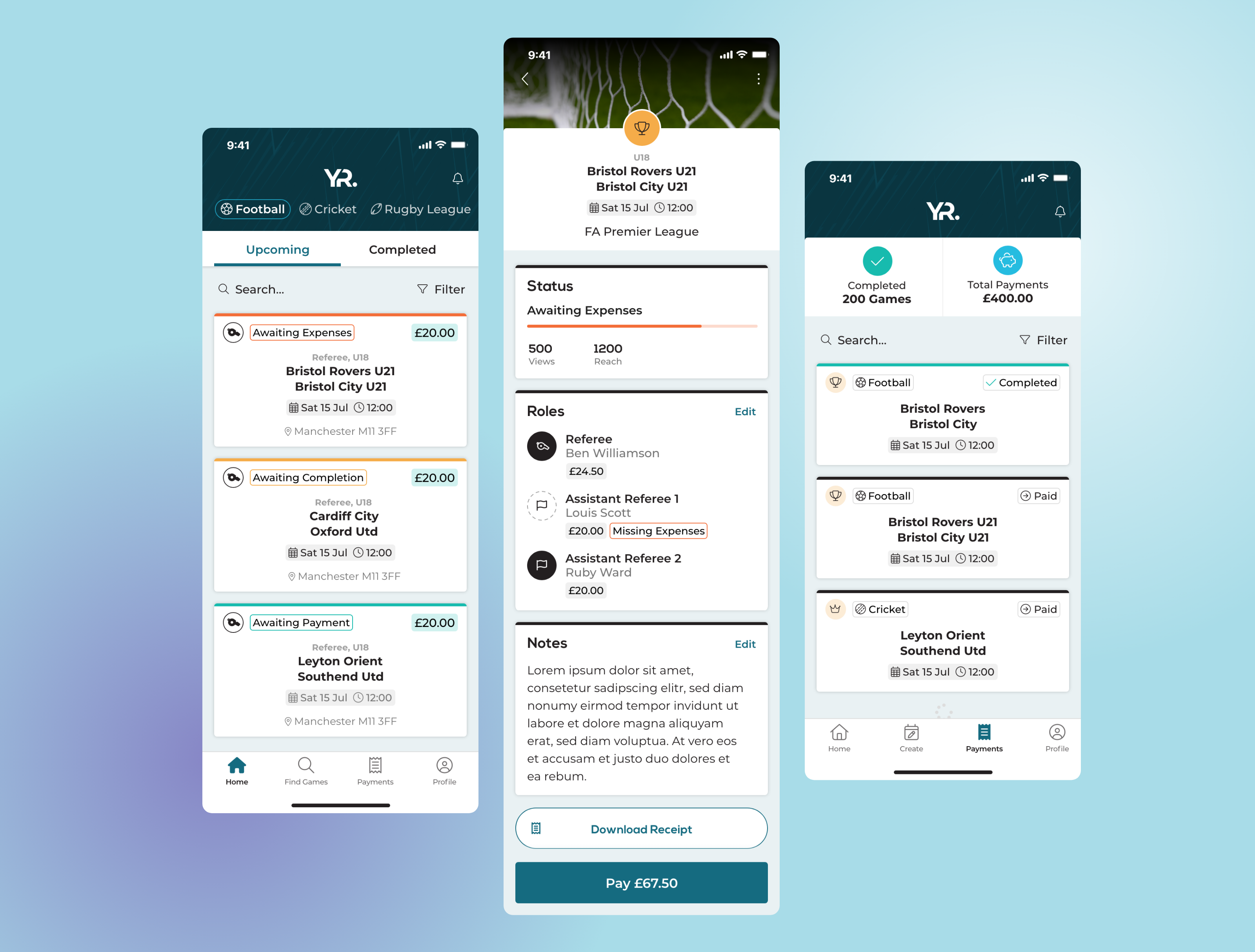
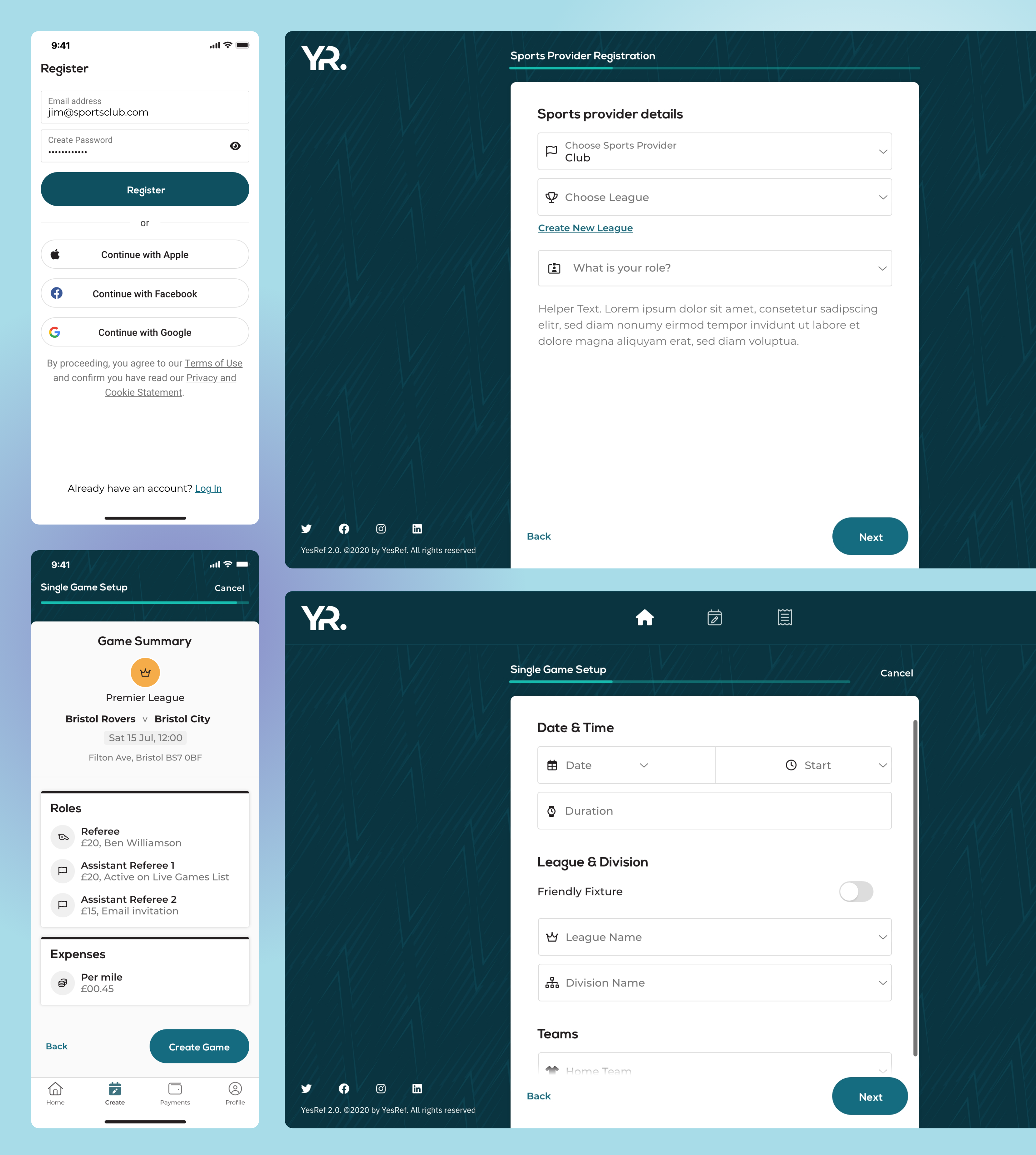
Userflows & Wireframing: I focused on building optimised "search-to-pay" journeys from the ground up, removing complexity to create a friction-free experience for early adopters.
Testing & Validation: I conducted targeted user testing with a small user base during the build phase. This allowed me to gather critical feedback and validate the MVP's functionality in real-world scenarios before the official launch.
3. Execution & Goal-Driven Design
The execution delivered a clean, effective user experience that established a professional standard for the product's debut.
Foundational Systems
Lead Design Strategy: I defined the initial design direction, ensuring a user-centric approach was embedded in the product from its very first iteration.
Intuitive UI Design: I crafted a clean, modern visual language that prioritised clarity, ensuring that complex data—such as payment histories and scheduling calendars—was immediately digestible for all users.
Accessibility & Feasibility: I designed with a focus on cross-device accessibility to support referees in the field, ensuring the MVP was a practical, go-to-market tool.
4. Measurable Impact & Results
The MVP build successfully launched the platform as a market-ready B2B tool capable of handling professional sports logistics from day one.
Direct Resulting Impact
Reduced Admin Friction: The strategic design of user flows and IA resulted in a 20% reduction in administrative friction within the first 6 months of launch, proving the efficiency of the MVP build.
Rapid Market Entry: By focusing on essential features and technical feasibility, I helped the startup move from concept to a live, functional platform at speed.
Data-Driven Foundations: The initial user testing phase ensured the launched product addressed the most critical pain points of sports organisations, securing immediate user engagement.
Summary
The YesRef project successfully demonstrated that a UX/UI-led MVP build can prioritise speed-to-market without sacrificing professional quality. By leading a lean team through a strategy-focused design process, I delivered a highly functional platform that achieved a 20% reduction in administrative friction within its first six months, providing a strong foundation for scalable growth.
Created at Totally.tech


Mockneybynature.design
Home
YesRef
Accelerating market entry through a high-efficiency MVP build
As the lead designer, I drove the build of a referee management platform, delivering a high-efficiency web app through strategic user flows and a streamlined UI to accelerate market entry.
Creative & Product Strategy
User Research
Prototyping
Design System
Web Accessibility
B2B Acumen
20% reduction in admin friction

Slide 1
Slide 2
Slide 3
1. Challenge & Strategic Alignment
The project’s goal was to build and launch a professional MVP web application for finding, paying, and managing sports referees to get the product to market fast. The core challenge was to architect a multi-sided marketplace, balancing the needs of sports organisations with the administrative requirements of referees within a lean, intuitive interface ready for immediate launch.
Goals
Business Goals: Rapidly deploy a high-performance platform that reduces administrative friction, establishes user trust during financial transactions, and provides a competitive entry point into the sports tech market.
Strategic Kickoff: As the Lead Designer, I spearheaded the creative and strategic direction for the initial build. I focused on defining a clear design rationale that prioritised essential core features, ensuring the product was robust enough for market entry while maintaining an accelerated development timeline.
2. Process, Team, and Design Phase
The project utilised a lean, agile approach to ensure a successful first-to-market launch without compromising on user experience.
Roles and Responsibility
Lead Designer: I was responsible for the end-to-end design of the MVP, including UX strategy, Information Architecture, and high-fidelity UI execution.
Team Members: The core project team consisted of myself (Lead Designer), a UX Designer, a Project Manager, and a Frontend Developer.
Technical Collaboration: I worked in close partnership with the Frontend Developer to ensure the design was optimised for a fast build, maintaining a focus on technical feasibility and rapid deployment.
Design phase and testing strategy
Information Architecture: I structured the application’s initial logic to prioritise "seamless navigation" for core tasks like referee scheduling and payment processing.
Userflows & Wireframing: I focused on building optimised "search-to-pay" journeys from the ground up, removing complexity to create a friction-free experience for early adopters.
Testing & Validation: I conducted targeted user testing with a small user base during the build phase. This allowed me to gather critical feedback and validate the MVP's functionality in real-world scenarios before the official launch.
3. Execution & Goal-Driven Design
The execution delivered a clean, effective user experience that established a professional standard for the product's debut.
Foundational Systems
Lead Design Strategy: I defined the initial design direction, ensuring a user-centric approach was embedded in the product from its very first iteration.
Intuitive UI Design: I crafted a clean, modern visual language that prioritised clarity, ensuring that complex data—such as payment histories and scheduling calendars—was immediately digestible for all users.
Accessibility & Feasibility: I designed with a focus on cross-device accessibility to support referees in the field, ensuring the MVP was a practical, go-to-market tool.
4. Measurable Impact & Results
The MVP build successfully launched the platform as a market-ready B2B tool capable of handling professional sports logistics from day one.
Direct Resulting Impact
Reduced Admin Friction: The strategic design of user flows and IA resulted in a 20% reduction in administrative friction within the first 6 months of launch, proving the efficiency of the MVP build.
Rapid Market Entry: By focusing on essential features and technical feasibility, I helped the startup move from concept to a live, functional platform at speed.
Data-Driven Foundations: The initial user testing phase ensured the launched product addressed the most critical pain points of sports organisations, securing immediate user engagement.
Summary
The YesRef project successfully demonstrated that a UX/UI-led MVP build can prioritise speed-to-market without sacrificing professional quality. By leading a lean team through a strategy-focused design process, I delivered a highly functional platform that achieved a 20% reduction in administrative friction within its first six months, providing a strong foundation for scalable growth.
Created at Totally.tech
Next project
Share to Buy
Web design for one of the country's leading property portals
20% lift in conversion rates
Digital Branding
Creative & Product Strategy
User Research
Prototyping
Design System
Web Accessibility
B2C Acumen
Mockneybynature.design


Home
YesRef
Accelerating market entry through a high-efficiency MVP build
As the lead designer, I drove the build of a referee management platform, delivering a high-efficiency web app through strategic user flows and a streamlined UI to accelerate market entry.
Creative & Product Strategy
User Research
Prototyping
Design System
Web Accessibility
B2B Acumen
20% reduction in admin friction

Slide 1
Slide 2
Slide 3
1. Challenge & Strategic Alignment
The project’s goal was to build and launch a professional MVP web application for finding, paying, and managing sports referees to get the product to market fast. The core challenge was to architect a multi-sided marketplace, balancing the needs of sports organisations with the administrative requirements of referees within a lean, intuitive interface ready for immediate launch.
Goals
Business Goals: Rapidly deploy a high-performance platform that reduces administrative friction, establishes user trust during financial transactions, and provides a competitive entry point into the sports tech market.
Strategic Kickoff: As the Lead Designer, I spearheaded the creative and strategic direction for the initial build. I focused on defining a clear design rationale that prioritised essential core features, ensuring the product was robust enough for market entry while maintaining an accelerated development timeline.
2. Process, Team, and Design Phase
The project utilised a lean, agile approach to ensure a successful first-to-market launch without compromising on user experience.
Roles and Responsibility
Lead Designer: I was responsible for the end-to-end design of the MVP, including UX strategy, Information Architecture, and high-fidelity UI execution.
Team Members: The core project team consisted of myself (Lead Designer), a UX Designer, a Project Manager, and a Frontend Developer.
Technical Collaboration: I worked in close partnership with the Frontend Developer to ensure the design was optimised for a fast build, maintaining a focus on technical feasibility and rapid deployment.
Design phase and testing strategy
Information Architecture: I structured the application’s initial logic to prioritise "seamless navigation" for core tasks like referee scheduling and payment processing.
Userflows & Wireframing: I focused on building optimised "search-to-pay" journeys from the ground up, removing complexity to create a friction-free experience for early adopters.
Testing & Validation: I conducted targeted user testing with a small user base during the build phase. This allowed me to gather critical feedback and validate the MVP's functionality in real-world scenarios before the official launch.
3. Execution & Goal-Driven Design
The execution delivered a clean, effective user experience that established a professional standard for the product's debut.
Foundational Systems
Lead Design Strategy: I defined the initial design direction, ensuring a user-centric approach was embedded in the product from its very first iteration.
Intuitive UI Design: I crafted a clean, modern visual language that prioritised clarity, ensuring that complex data—such as payment histories and scheduling calendars—was immediately digestible for all users.
Accessibility & Feasibility: I designed with a focus on cross-device accessibility to support referees in the field, ensuring the MVP was a practical, go-to-market tool.
4. Measurable Impact & Results
The MVP build successfully launched the platform as a market-ready B2B tool capable of handling professional sports logistics from day one.
Direct Resulting Impact
Reduced Admin Friction: The strategic design of user flows and IA resulted in a 20% reduction in administrative friction within the first 6 months of launch, proving the efficiency of the MVP build.
Rapid Market Entry: By focusing on essential features and technical feasibility, I helped the startup move from concept to a live, functional platform at speed.
Data-Driven Foundations: The initial user testing phase ensured the launched product addressed the most critical pain points of sports organisations, securing immediate user engagement.
Summary
The YesRef project successfully demonstrated that a UX/UI-led MVP build can prioritise speed-to-market without sacrificing professional quality. By leading a lean team through a strategy-focused design process, I delivered a highly functional platform that achieved a 20% reduction in administrative friction within its first six months, providing a strong foundation for scalable growth.
Created at Totally.tech
Next project
Share to Buy
Web design for one of the country's leading property portals
20% lift in conversion rates
Digital Branding
Creative & Product Strategy
User Research
Prototyping
Design System
Web Accessibility
B2C Acumen
Mockneybynature.design