

Home
Totally
Crafting a Unified Brand Ecosystem
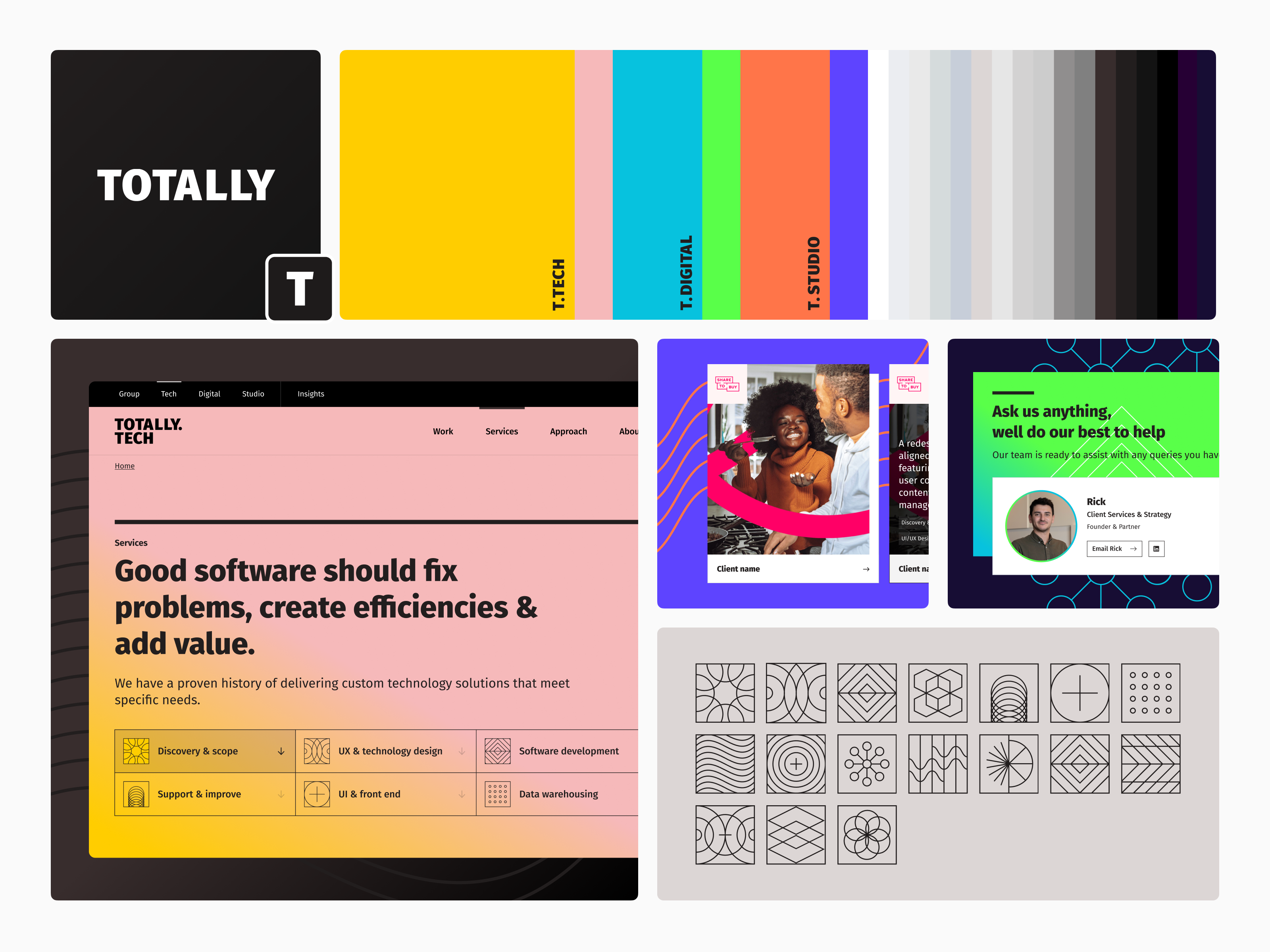
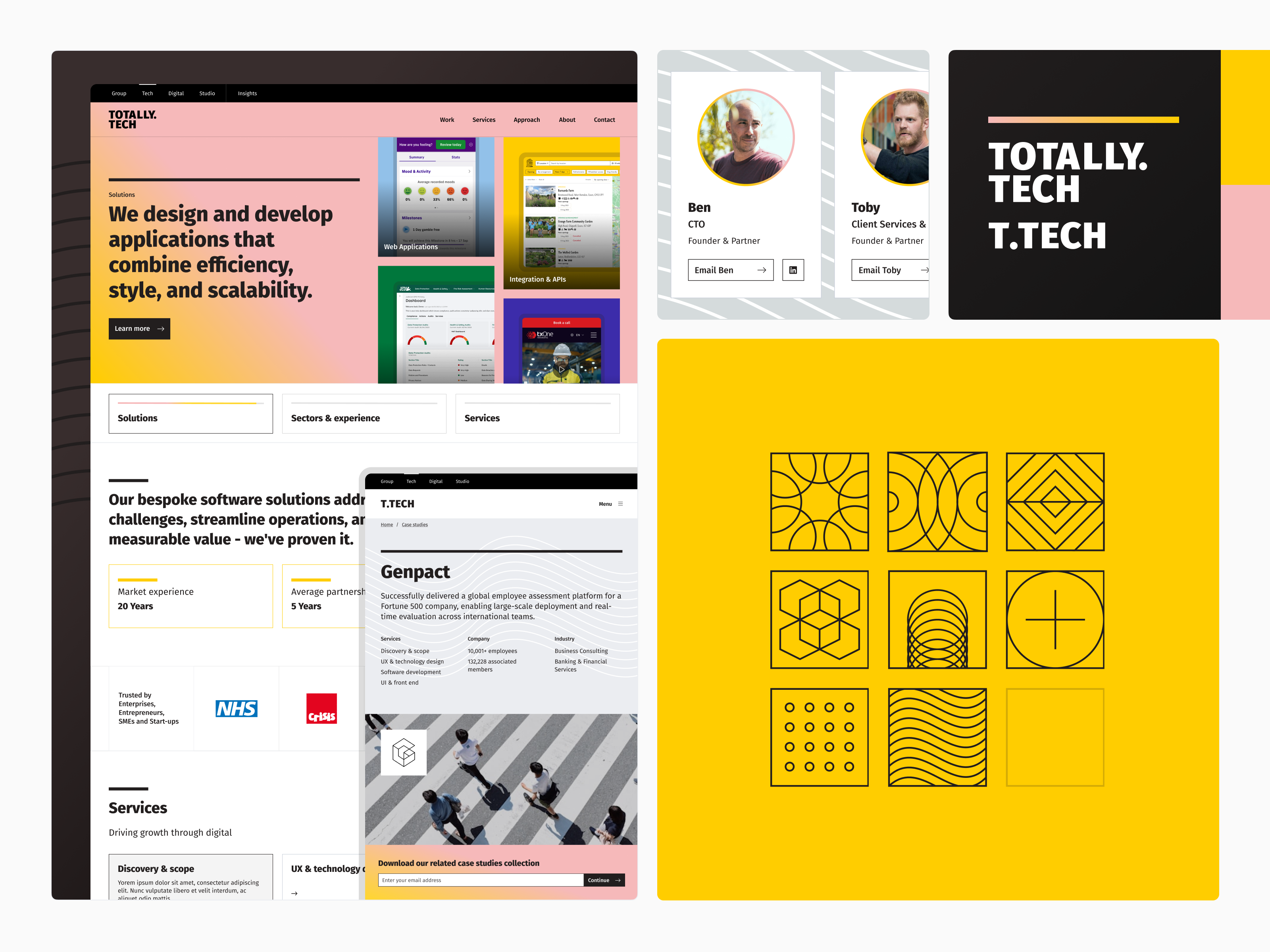
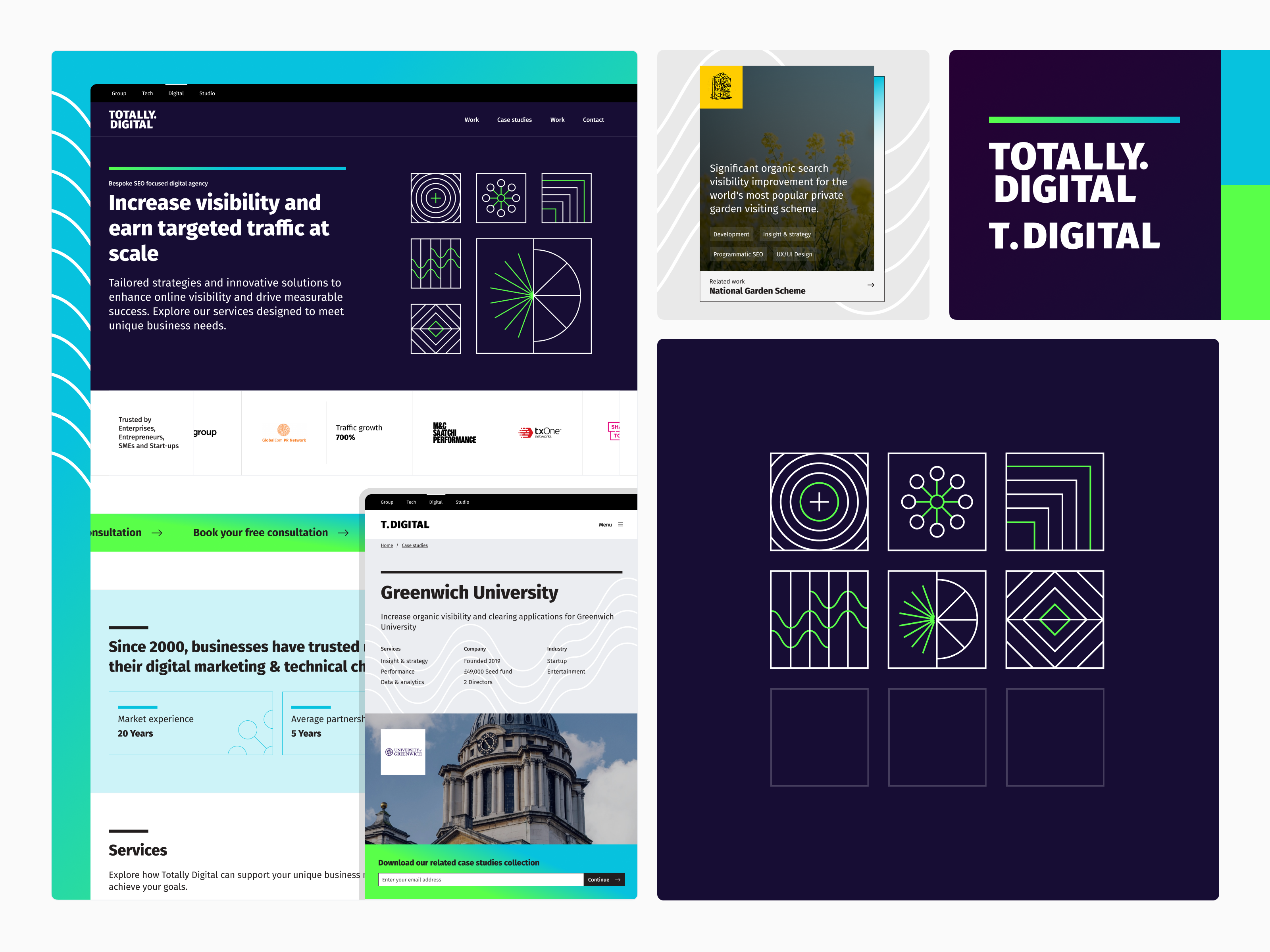
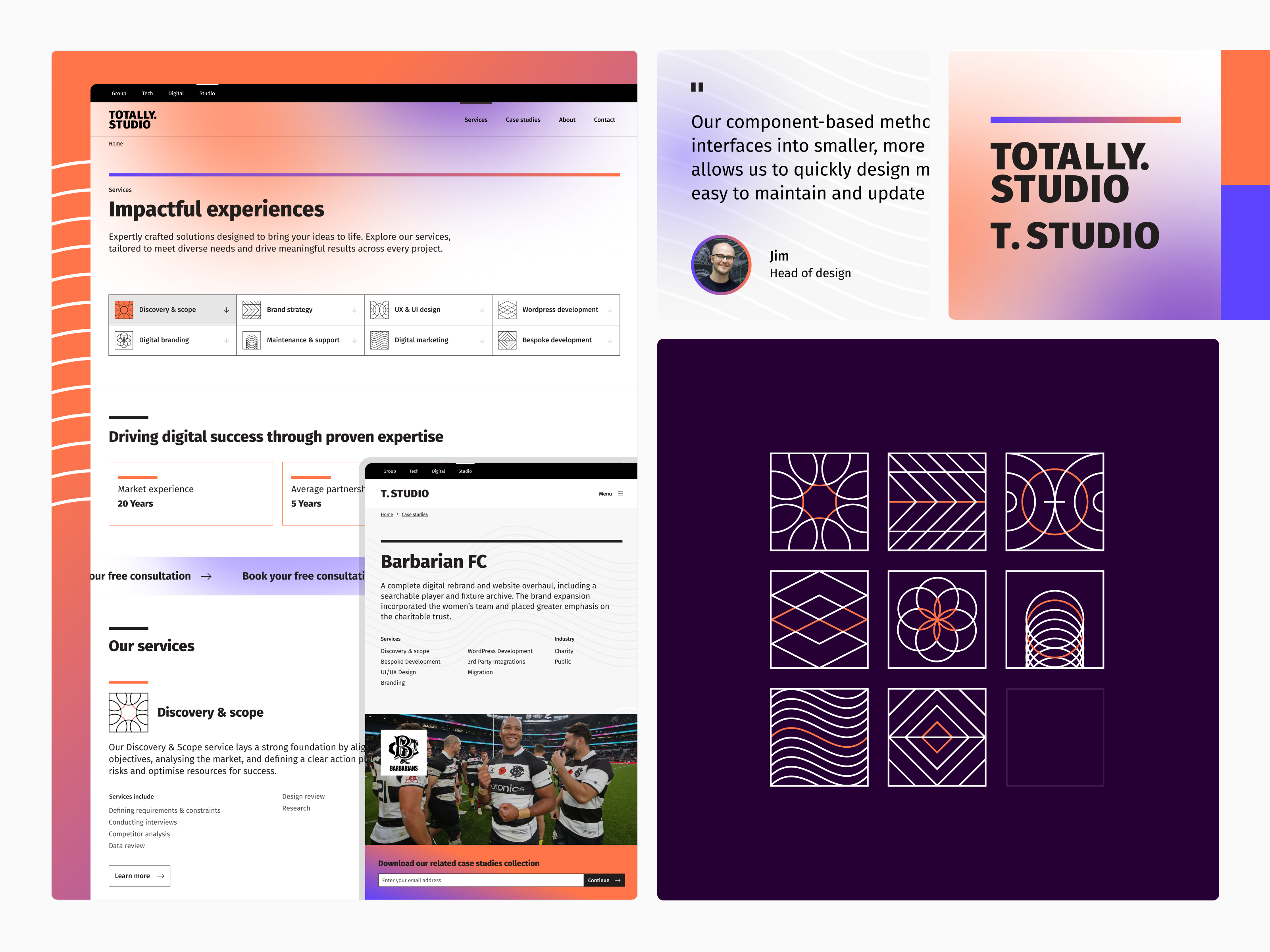
For a dynamic development agency and its subsidiaries, I developed a comprehensive branding solution and full design system.
Digital Branding
Creative & Product Strategy
User Research
Prototyping
Design System
Web Accessibility
B2B Acumen
100% consistency across all subsidiary digital products

Slide 1
Slide 2
Slide 3
1. Challenge & Strategic Alignment
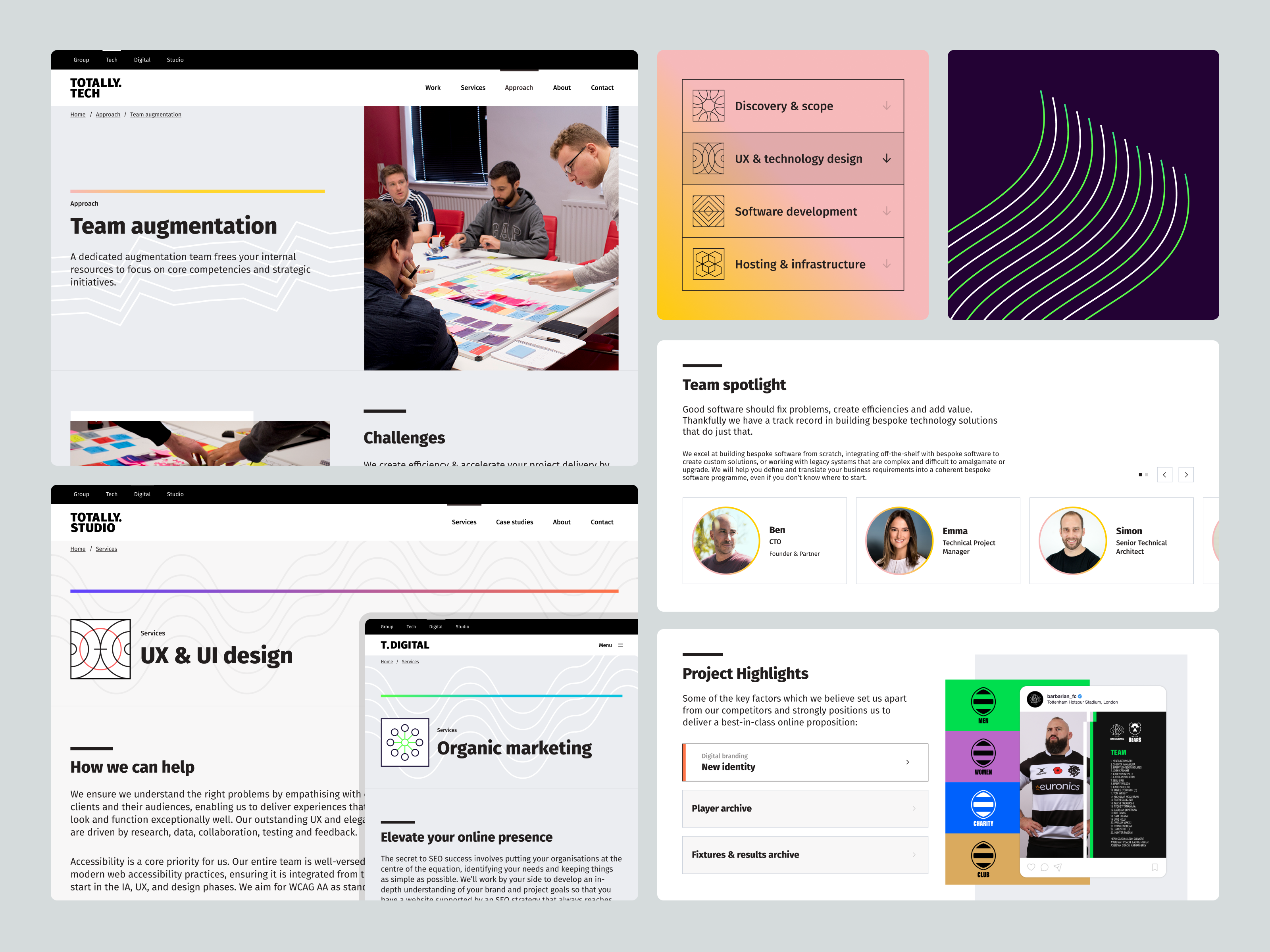
The project’s goal was to architect a unified brand ecosystem for a high-growth development agency and its specialised subsidiaries. The core challenge was to create a cohesive parent identity that could seamlessly integrate diverse service pillars—including web design, native application development, marketing/SEO, and UX/UI design—without diluting the expert focus of each department.
Goals
Business Goals: Establish a robust brand architecture that scales with the agency’s growth, ensures visual consistency across multiple digital and physical touchpoints, and positions the firm as a multi-disciplinary powerhouse.
Strategic Kickoff: I spearheaded the creative direction, focusing on structural clarity and a "unified yet flexible" framework. The process began by defining a design strategy that balanced the technical precision of a development house with the creative agility of a design studio.
2. Process, Team, and Design Phase
The project required a strategic overhaul of the agency’s visual language, transitioning from fragmented service offerings to a centralised design system.
Roles and Responsibility
Design Leadership & Execution: Myself (Lead Designer). I was responsible for the end-to-end brand strategy, the creation of the modular design system, and the cross-platform application of the new identity.
Team Members: I collaborated closely with the Internal Stakeholders (Heads of Departments) to ensure the sub-brands reflected their specific technical requirements, and the Lead Developers to ensure the design system was technically feasible for rapid deployment.
Design phase and testing strategy
Initial Research & Collaboration: I established a multi-tiered branding hierarchy. This allowed sub-brands to maintain unique market positions while remaining tethered to the parent agency’s core values and visual DNA.
Branding Strategy & Application: I established the new, bespoke brand identity for MyGamCare. Crucially, I ensured this was built on and added to the existing established branding for the parent organisation, GamCare, guaranteeing brand consistency and leveraging the parent's foundation of trust.
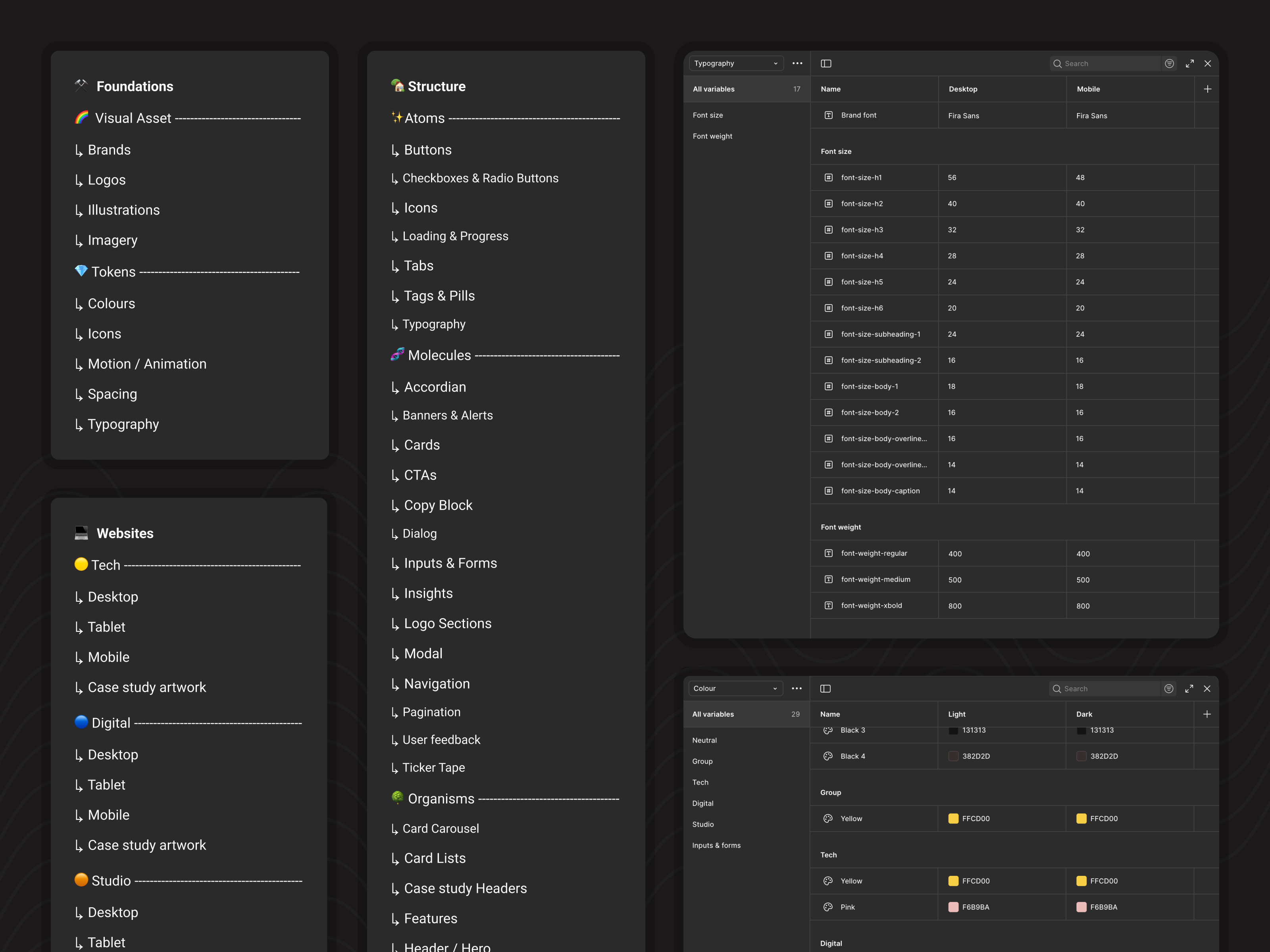
Design System Engineering: I moved beyond static assets to create a living library of reusable components, a meticulously defined colour palette, and consistent graphical treatments. This was specifically engineered to streamline the agency's internal workflow.
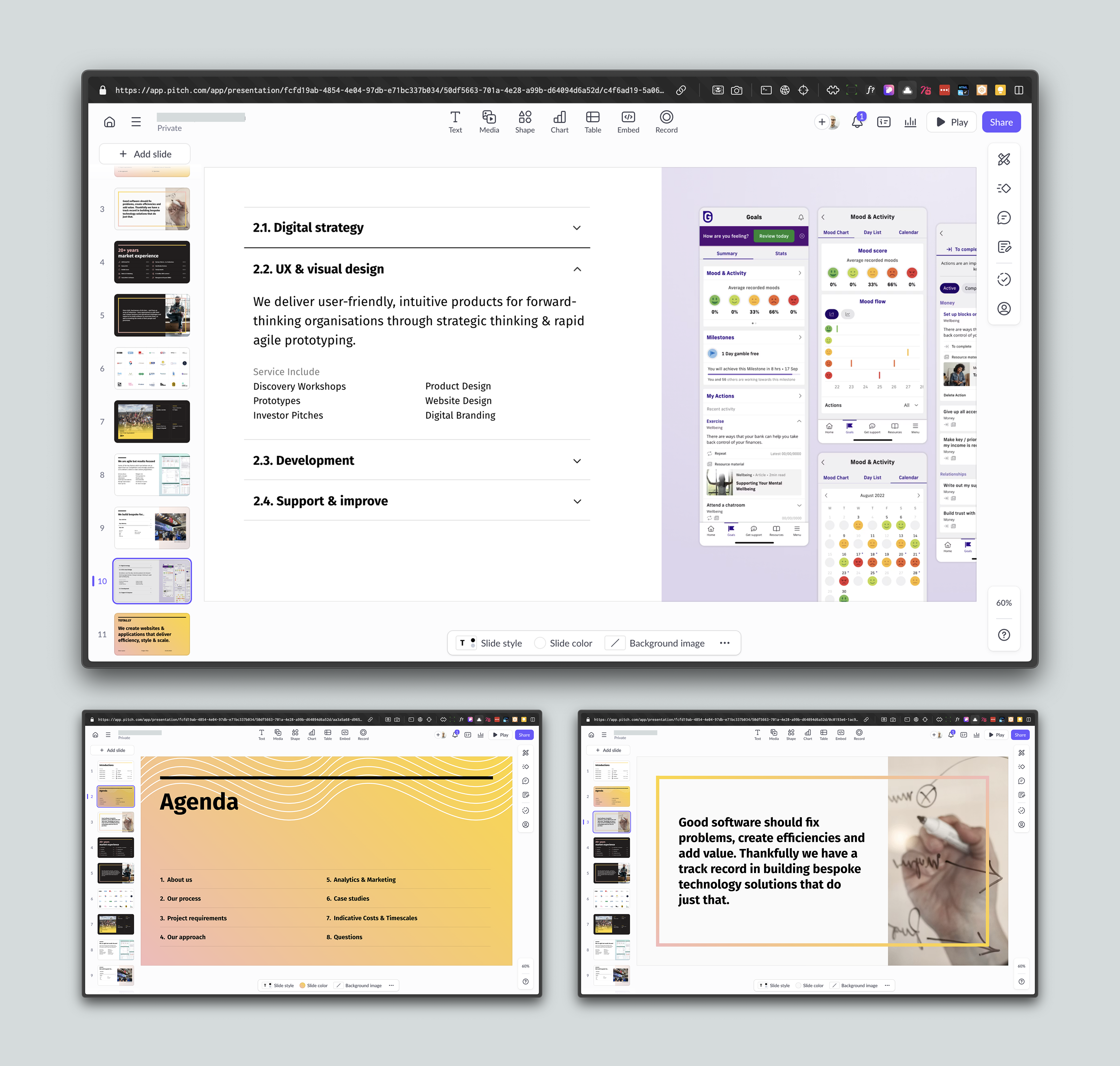
Versatility Testing: We tested the brand’s adaptability across high-stakes environments, ensuring the visual language remained impactful whether in a minimalist pitch deck, a complex technical website, or high-end printed collateral.
Versatility Testing: I developed a "stress-test" strategy for the brand, ensuring it could harmoniously integrate with various imagery styles and accommodate fluctuating copy lengths without breaking the layout or losing brand authority.
3. Execution & Goal-Driven Design
The execution delivered a sophisticated, flexible design ecosystem that functions as a toolkit for both the design and development teams.
Foundational Systems
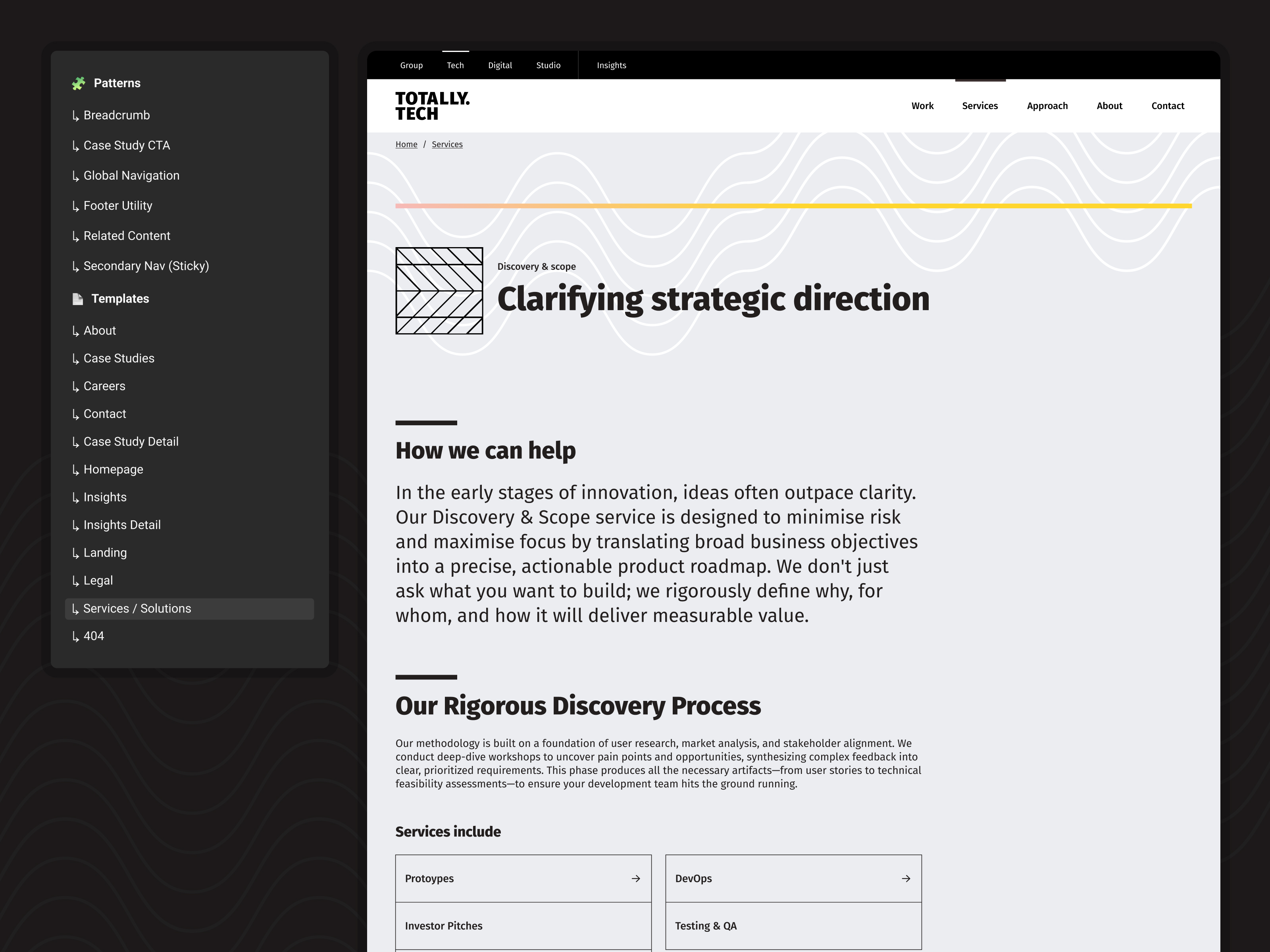
Complete Design System: I built a comprehensive library of UI components and style guides that served as the "single source of truth," reducing design debt and ensuring 100% consistency across all subsidiary digital products.
Technical Feasibility: By collaborating with the engineering team during the design phase, I ensured every component was optimised for code-efficient implementation in both web and native environments.
Integrated Brand Identity: The new identity successfully communicated a sense of "unified expertise," making the agency's cross-selling of services (e.g., SEO and UX) feel like a natural, integrated experience for the client.
A. Strategy & Direction
Design Rationale: I led the presentation of the design rationale to stakeholders, justifying every visual decision through the lens of scalability and market positioning.
Accessibility & Standards: Every element of the new design system was audited for accessibility, ensuring the agency’s own brand set a high benchmark for industry standards.
B. Multi-Channel Application)
Scalable Framework: The brand was designed to be "future-proof," allowing for the quick spin-up of new subsidiary websites or marketing campaigns using the pre-defined component library.
Digital-First Approach: While versatile for print, the system was optimised for high-performance digital environments, prioritising fast load times and responsive adaptability.
4. Measurable Impact & Results
The new brand ecosystem transformed the agency’s market presence and internal efficiency, resulting in a more professional and streamlined service delivery.
Direct Resulting Impact
Operational Efficiency: The implementation of the modular design system reduced the time-to-market for internal sub-brand projects by providing a pre-approved library of assets and components.
Unified Market Positioning: The agency successfully transitioned from being perceived as a collection of freelancers to a "unified powerhouse," leading to higher-tier client acquisitions and more successful cross-specialty pitches.
Consistency Without Constraint: The framework successfully accommodated a 100% increase in content diversity across the sub-brands without requiring any manual overrides to the core brand guidelines.
Summary
The project successfully delivered a flexible, scalable, and sophisticated identity for a modern development agency. It validated that a strategy-first approach to brand architecture is essential for agencies looking to scale their services and maintain a premium market position.
Created at Totally.tech


Mockneybynature.design
Home
Totally
Crafting a Unified Brand Ecosystem
For a dynamic development agency and its subsidiaries, I developed a comprehensive branding solution and full design system.
Digital Branding
Creative & Product Strategy
User Research
Prototyping
Design System
Web Accessibility
B2B Acumen
100% consistency across all subsidiary digital products

Slide 1
Slide 2
Slide 3
1. Challenge & Strategic Alignment
The project’s goal was to architect a unified brand ecosystem for a high-growth development agency and its specialised subsidiaries. The core challenge was to create a cohesive parent identity that could seamlessly integrate diverse service pillars—including web design, native application development, marketing/SEO, and UX/UI design—without diluting the expert focus of each department.
Goals
Business Goals: Establish a robust brand architecture that scales with the agency’s growth, ensures visual consistency across multiple digital and physical touchpoints, and positions the firm as a multi-disciplinary powerhouse.
Strategic Kickoff: I spearheaded the creative direction, focusing on structural clarity and a "unified yet flexible" framework. The process began by defining a design strategy that balanced the technical precision of a development house with the creative agility of a design studio.
2. Process, Team, and Design Phase
The project required a strategic overhaul of the agency’s visual language, transitioning from fragmented service offerings to a centralised design system.
Roles and Responsibility
Design Leadership & Execution: Myself (Lead Designer). I was responsible for the end-to-end brand strategy, the creation of the modular design system, and the cross-platform application of the new identity.
Team Members: I collaborated closely with the Internal Stakeholders (Heads of Departments) to ensure the sub-brands reflected their specific technical requirements, and the Lead Developers to ensure the design system was technically feasible for rapid deployment.
Design phase and testing strategy
Initial Research & Collaboration: I established a multi-tiered branding hierarchy. This allowed sub-brands to maintain unique market positions while remaining tethered to the parent agency’s core values and visual DNA.
Branding Strategy & Application: I established the new, bespoke brand identity for MyGamCare. Crucially, I ensured this was built on and added to the existing established branding for the parent organisation, GamCare, guaranteeing brand consistency and leveraging the parent's foundation of trust.
Design System Engineering: I moved beyond static assets to create a living library of reusable components, a meticulously defined colour palette, and consistent graphical treatments. This was specifically engineered to streamline the agency's internal workflow.
Versatility Testing: We tested the brand’s adaptability across high-stakes environments, ensuring the visual language remained impactful whether in a minimalist pitch deck, a complex technical website, or high-end printed collateral.
Versatility Testing: I developed a "stress-test" strategy for the brand, ensuring it could harmoniously integrate with various imagery styles and accommodate fluctuating copy lengths without breaking the layout or losing brand authority.
3. Execution & Goal-Driven Design
The execution delivered a sophisticated, flexible design ecosystem that functions as a toolkit for both the design and development teams.
Foundational Systems
Complete Design System: I built a comprehensive library of UI components and style guides that served as the "single source of truth," reducing design debt and ensuring 100% consistency across all subsidiary digital products.
Technical Feasibility: By collaborating with the engineering team during the design phase, I ensured every component was optimised for code-efficient implementation in both web and native environments.
Integrated Brand Identity: The new identity successfully communicated a sense of "unified expertise," making the agency's cross-selling of services (e.g., SEO and UX) feel like a natural, integrated experience for the client.
A. Strategy & Direction
Design Rationale: I led the presentation of the design rationale to stakeholders, justifying every visual decision through the lens of scalability and market positioning.
Accessibility & Standards: Every element of the new design system was audited for accessibility, ensuring the agency’s own brand set a high benchmark for industry standards.
B. Multi-Channel Application)
Scalable Framework: The brand was designed to be "future-proof," allowing for the quick spin-up of new subsidiary websites or marketing campaigns using the pre-defined component library.
Digital-First Approach: While versatile for print, the system was optimised for high-performance digital environments, prioritising fast load times and responsive adaptability.
4. Measurable Impact & Results
The new brand ecosystem transformed the agency’s market presence and internal efficiency, resulting in a more professional and streamlined service delivery.
Direct Resulting Impact
Operational Efficiency: The implementation of the modular design system reduced the time-to-market for internal sub-brand projects by providing a pre-approved library of assets and components.
Unified Market Positioning: The agency successfully transitioned from being perceived as a collection of freelancers to a "unified powerhouse," leading to higher-tier client acquisitions and more successful cross-specialty pitches.
Consistency Without Constraint: The framework successfully accommodated a 100% increase in content diversity across the sub-brands without requiring any manual overrides to the core brand guidelines.
Summary
The project successfully delivered a flexible, scalable, and sophisticated identity for a modern development agency. It validated that a strategy-first approach to brand architecture is essential for agencies looking to scale their services and maintain a premium market position.
Created at Totally.tech
Next project
Totally
Crafting a Unified Brand Ecosystem
100% consistency across all subsidiary digital products
Digital Branding
Creative & Product Strategy
User Research
Prototyping
Design System
Web Accessibility
B2B Acumen
Mockneybynature.design

Home
Totally
Crafting a Unified Brand Ecosystem
For a dynamic development agency and its subsidiaries, I developed a comprehensive branding solution and full design system.
Digital Branding
Creative & Product Strategy
User Research
Prototyping
Design System
Web Accessibility
B2B Acumen
100% consistency across all subsidiary digital products

Slide 1
Slide 2
Slide 3
1. Challenge & Strategic Alignment
The project’s goal was to architect a unified brand ecosystem for a high-growth development agency and its specialised subsidiaries. The core challenge was to create a cohesive parent identity that could seamlessly integrate diverse service pillars—including web design, native application development, marketing/SEO, and UX/UI design—without diluting the expert focus of each department.
Goals
Business Goals: Establish a robust brand architecture that scales with the agency’s growth, ensures visual consistency across multiple digital and physical touchpoints, and positions the firm as a multi-disciplinary powerhouse.
Strategic Kickoff: I spearheaded the creative direction, focusing on structural clarity and a "unified yet flexible" framework. The process began by defining a design strategy that balanced the technical precision of a development house with the creative agility of a design studio.
2. Process, Team, and Design Phase
The project required a strategic overhaul of the agency’s visual language, transitioning from fragmented service offerings to a centralised design system.
Roles and Responsibility
Design Leadership & Execution: Myself (Lead Designer). I was responsible for the end-to-end brand strategy, the creation of the modular design system, and the cross-platform application of the new identity.
Team Members: I collaborated closely with the Internal Stakeholders (Heads of Departments) to ensure the sub-brands reflected their specific technical requirements, and the Lead Developers to ensure the design system was technically feasible for rapid deployment.
Design phase and testing strategy
Initial Research & Collaboration: I established a multi-tiered branding hierarchy. This allowed sub-brands to maintain unique market positions while remaining tethered to the parent agency’s core values and visual DNA.
Branding Strategy & Application: I established the new, bespoke brand identity for MyGamCare. Crucially, I ensured this was built on and added to the existing established branding for the parent organisation, GamCare, guaranteeing brand consistency and leveraging the parent's foundation of trust.
Design System Engineering: I moved beyond static assets to create a living library of reusable components, a meticulously defined colour palette, and consistent graphical treatments. This was specifically engineered to streamline the agency's internal workflow.
Versatility Testing: We tested the brand’s adaptability across high-stakes environments, ensuring the visual language remained impactful whether in a minimalist pitch deck, a complex technical website, or high-end printed collateral.
Versatility Testing: I developed a "stress-test" strategy for the brand, ensuring it could harmoniously integrate with various imagery styles and accommodate fluctuating copy lengths without breaking the layout or losing brand authority.
3. Execution & Goal-Driven Design
The execution delivered a sophisticated, flexible design ecosystem that functions as a toolkit for both the design and development teams.
Foundational Systems
Complete Design System: I built a comprehensive library of UI components and style guides that served as the "single source of truth," reducing design debt and ensuring 100% consistency across all subsidiary digital products.
Technical Feasibility: By collaborating with the engineering team during the design phase, I ensured every component was optimised for code-efficient implementation in both web and native environments.
Integrated Brand Identity: The new identity successfully communicated a sense of "unified expertise," making the agency's cross-selling of services (e.g., SEO and UX) feel like a natural, integrated experience for the client.
A. Strategy & Direction
Design Rationale: I led the presentation of the design rationale to stakeholders, justifying every visual decision through the lens of scalability and market positioning.
Accessibility & Standards: Every element of the new design system was audited for accessibility, ensuring the agency’s own brand set a high benchmark for industry standards.
B. Multi-Channel Application)
Scalable Framework: The brand was designed to be "future-proof," allowing for the quick spin-up of new subsidiary websites or marketing campaigns using the pre-defined component library.
Digital-First Approach: While versatile for print, the system was optimised for high-performance digital environments, prioritising fast load times and responsive adaptability.
4. Measurable Impact & Results
The new brand ecosystem transformed the agency’s market presence and internal efficiency, resulting in a more professional and streamlined service delivery.
Direct Resulting Impact
Operational Efficiency: The implementation of the modular design system reduced the time-to-market for internal sub-brand projects by providing a pre-approved library of assets and components.
Unified Market Positioning: The agency successfully transitioned from being perceived as a collection of freelancers to a "unified powerhouse," leading to higher-tier client acquisitions and more successful cross-specialty pitches.
Consistency Without Constraint: The framework successfully accommodated a 100% increase in content diversity across the sub-brands without requiring any manual overrides to the core brand guidelines.
Summary
The project successfully delivered a flexible, scalable, and sophisticated identity for a modern development agency. It validated that a strategy-first approach to brand architecture is essential for agencies looking to scale their services and maintain a premium market position.
Created at Totally.tech
Next project
Totally
Crafting a Unified Brand Ecosystem
100% consistency across all subsidiary digital products
Digital Branding
Creative & Product Strategy
User Research
Prototyping
Design System
Web Accessibility
B2B Acumen
Mockneybynature.design